
Product Redesign
Client: Prime Digital Academy
My Role: Researcher & Designer | Team: Solo Project | Duration: 1 week
Project Summary:
Prime Digital Academy needed to improve its welcome gift to be more usable and meaningful for students. Using multiple research methods & evaluations, I redesigned a package incorporating 3 important values. The result was a new concept that would give a more memorable and positive gift experience for Prime’s students on their first day of school.
Before:
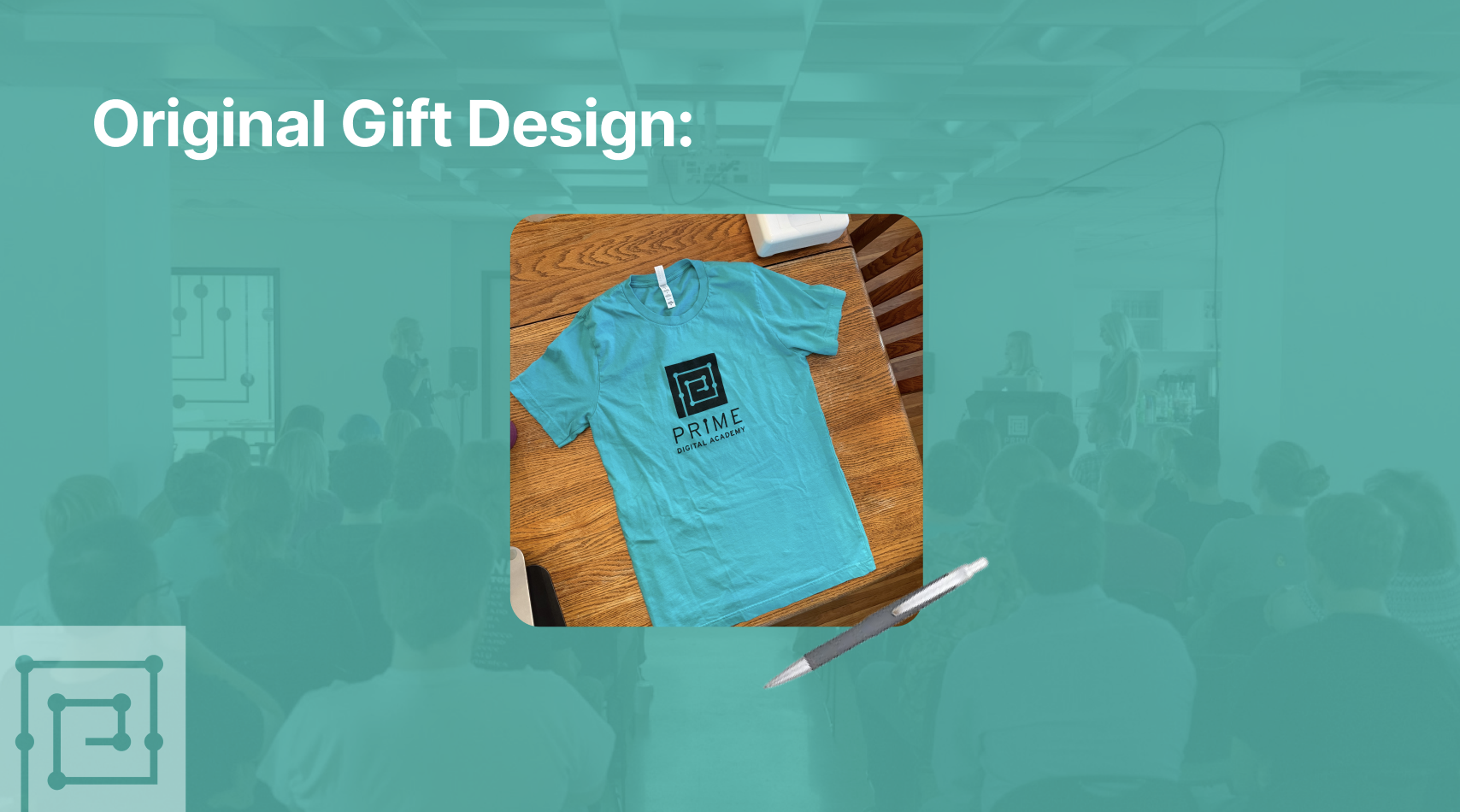
Students found the t-shirt and pen to be useless & unmemorable.
After:
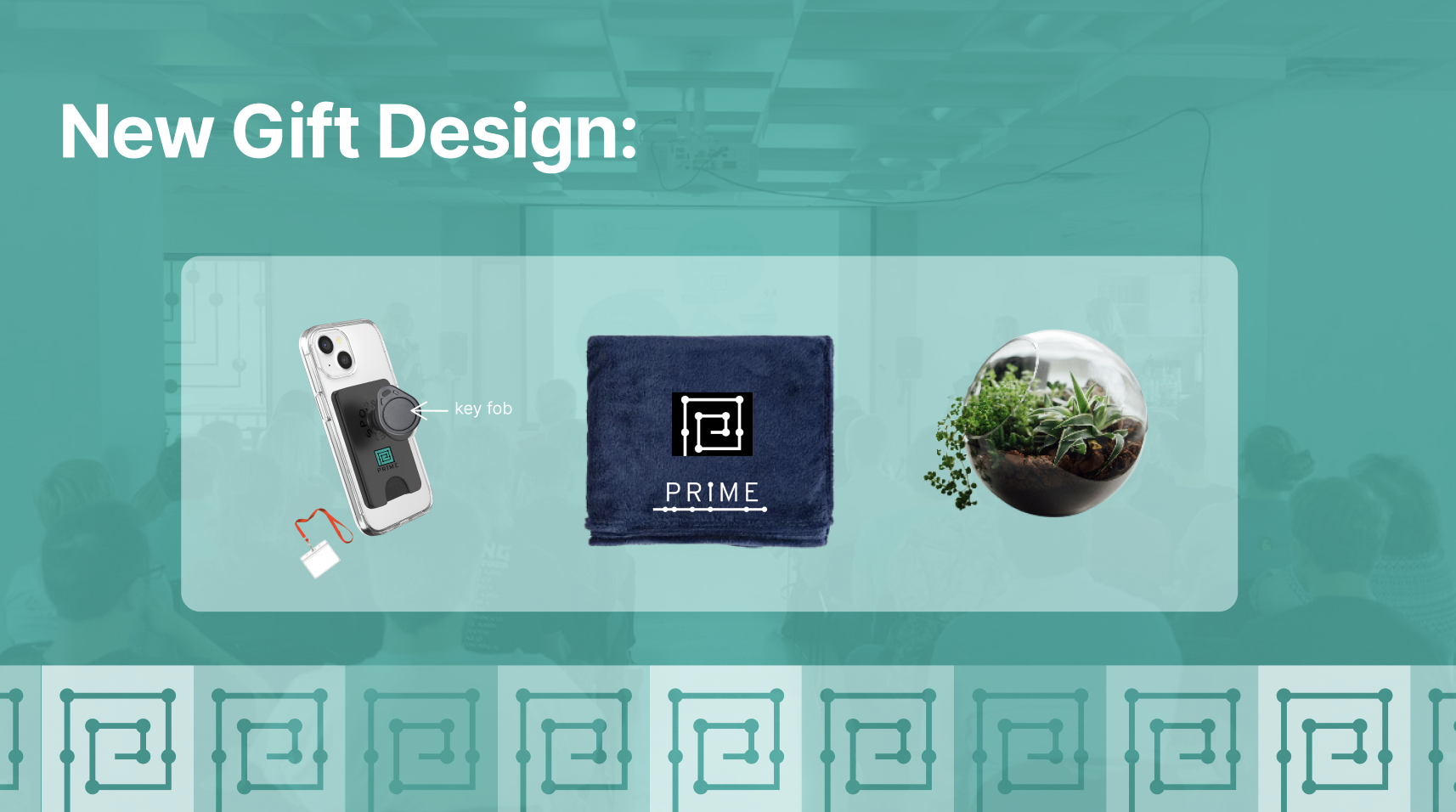
Students found our redesign more meaningful.
Design Process:
Initial Research
Research Synthesis
Ideate & Design
Evaluation & Research
Finalized Concept
Round 1:
Going Broad
Research Methods:
Conducted fly-on-the-wall observations using the AEIOU framework while students were completing a task in class
Interviewed two students who received the older design
Goals:
Learn what products and tools students currently use and where there might be opportunities to enhance their experience
Unpack students’ preferences for receiving gifts and gain insight into how they interpreted their welcome gift
Synthesis & Strategy:
Creating comfort - student projects take days to complete, they want to feel comfortable in the environment they’ll be sitting in for long periods.
Feeling welcomed - repeatedly, students expressed that the highlights of their first day were moments they felt a sense of belonging to a community
Something memorable = most students either hardly remember the original gift they received, lost their gift, or thought it was more of a marketing gimmick than an actual gift.
Outcome:
With the strategy in place, I designed three separate concepts to be evaluated & compared by students.
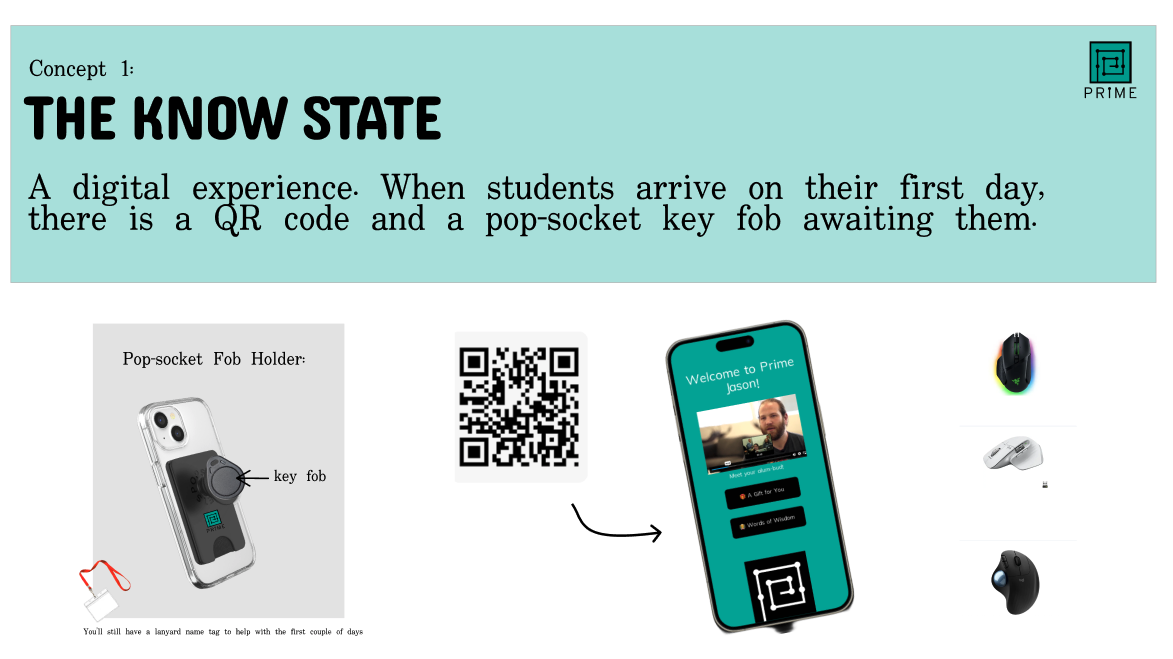
Concept 1: The Know State
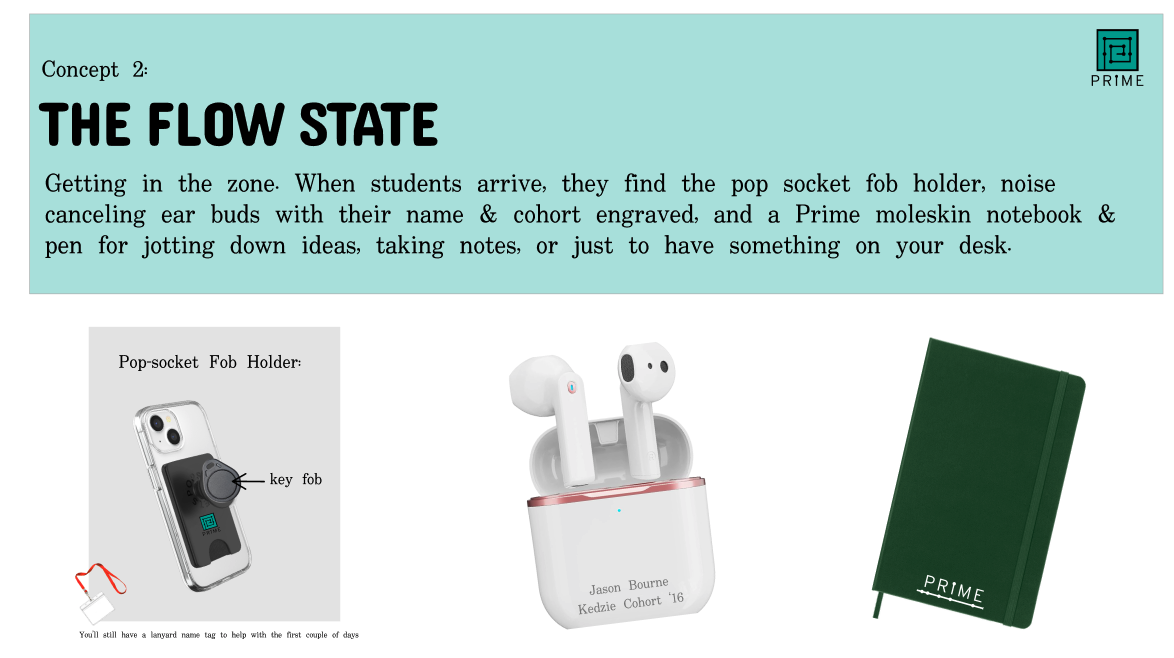
Concept 2: The Flow State
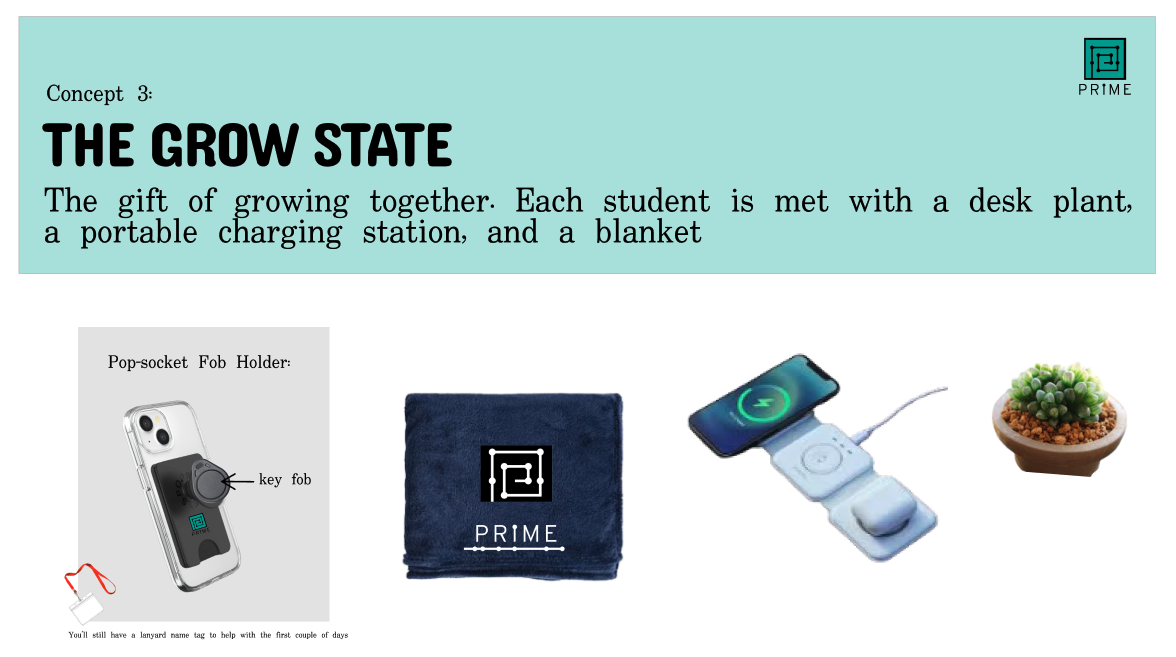
Concept 3: The Grow State

Defining “Meaningful”:
In the initial evaluation of these packages, I found the data contradictory. The word “meaningful” seemed to be extremely subjective. This led me to a second round of research to understand students’ values and narrow my concept into one, usable design.
Round 2:
Narrowing In
Research Methods:
Desirability Survey with 6 students
Value-Based Assessment activity with 3 students
Goals:
Unpack the word “meaningful” and what students associated with it in terms of receiving a gift
To learn which of the three concepts I should take into further testing
Develop a finalized design concept to share with stakeholders
Synthesis & Strategy:
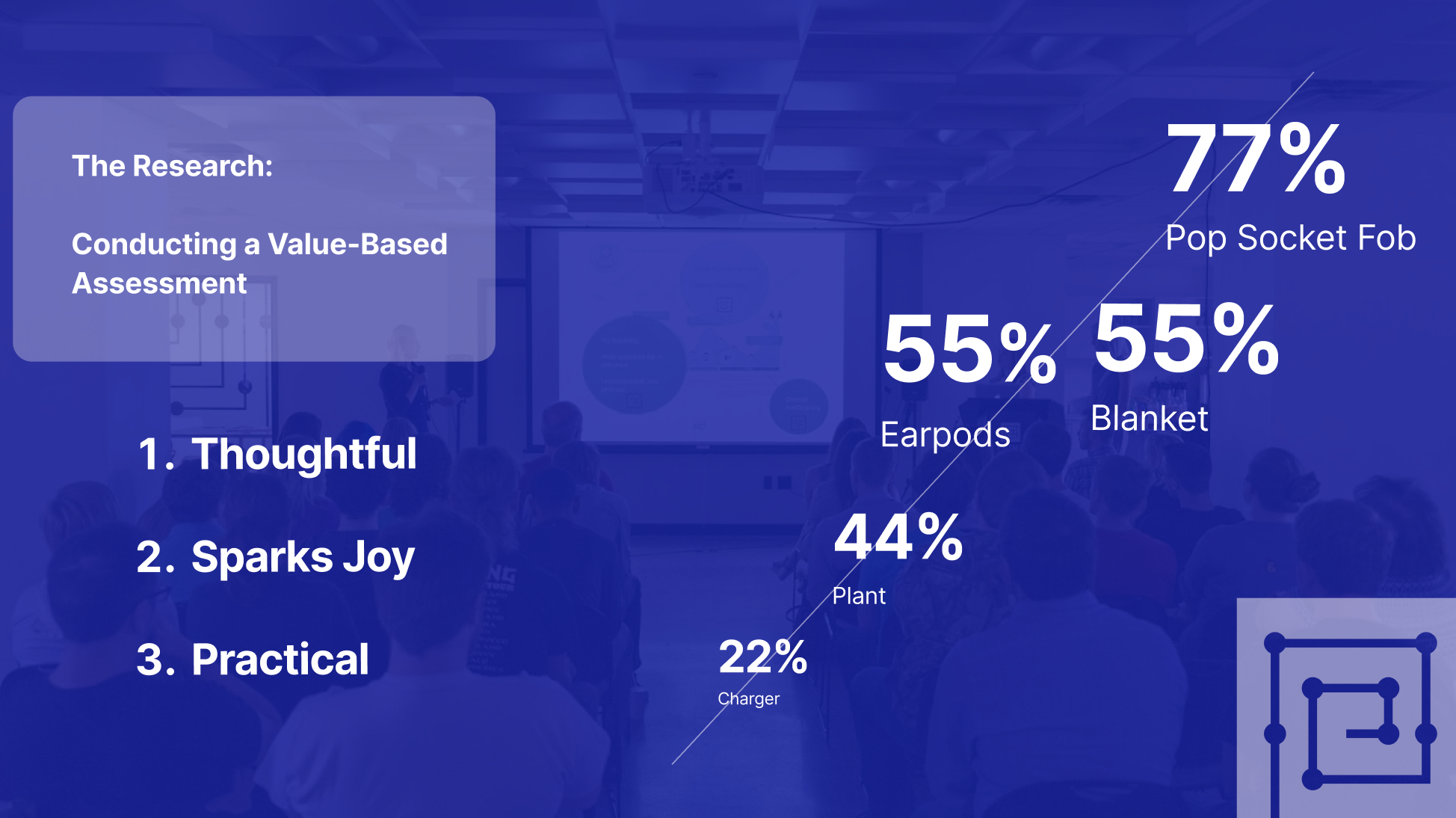
Thoughtfulness, Sparks Joy, and Practicality - through the Value-Based Assessment activity, I found that students rated these three values highly in terms of what made a gift meaningful
Associating products with value - discovering products that are most highly associated with the value students have
Inclusivity - our data pool was limited to a gift that would be given to hundreds, any outliers needed to be compared to outside studies
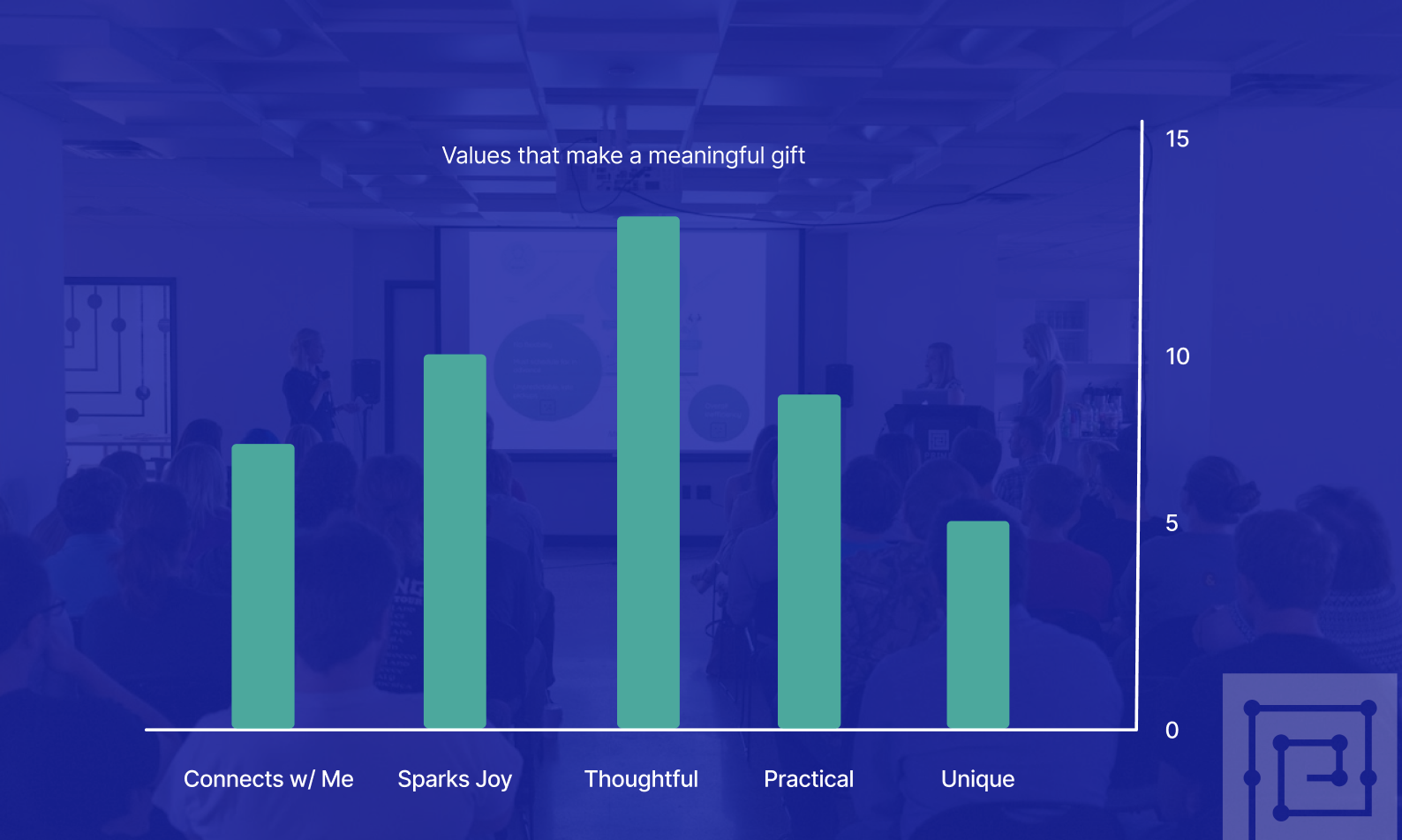
Students valued thoughtfulness, joy, and practicality most in the gifts they receive.
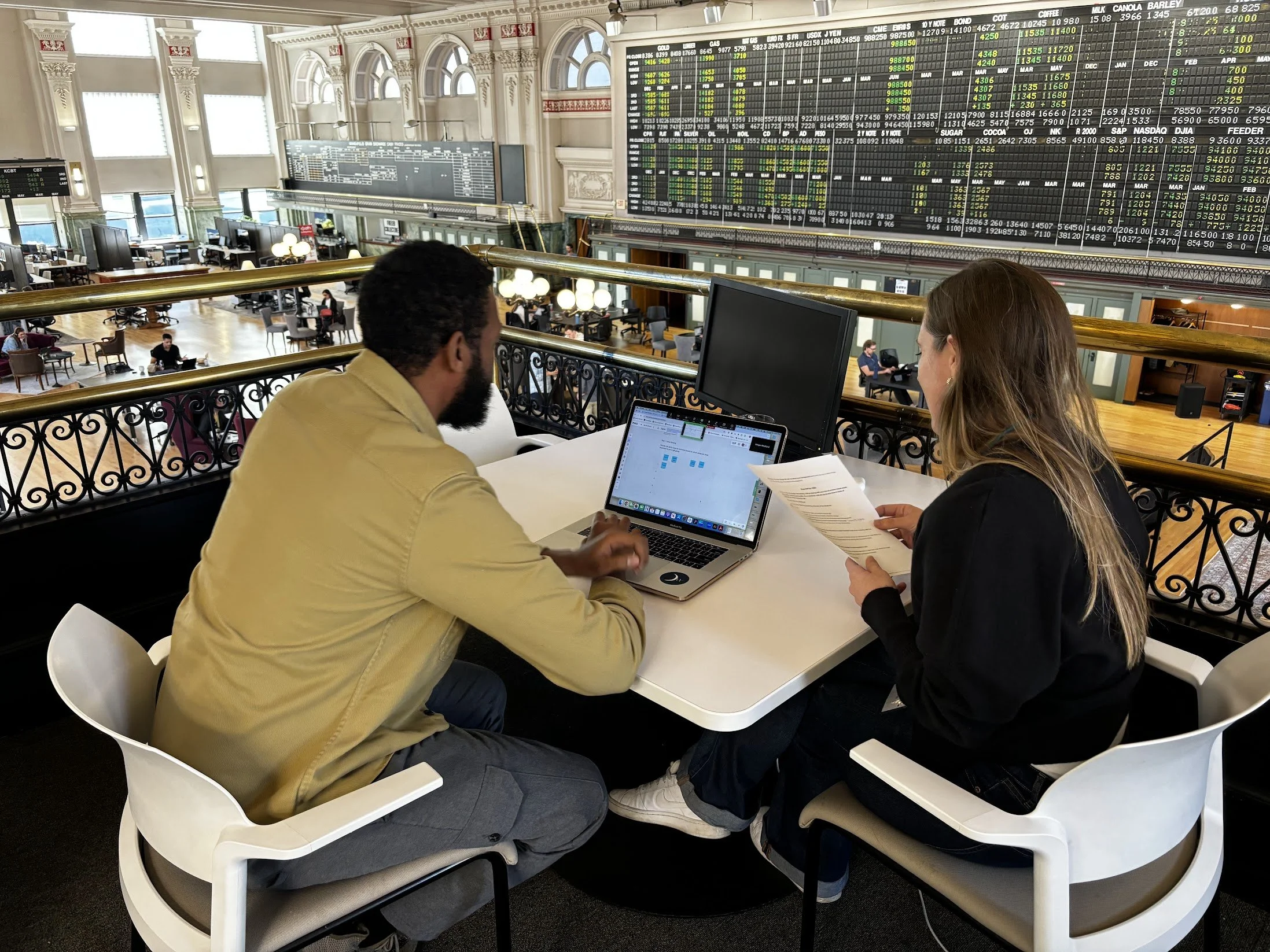
Conducting Value-Based Assessment activity with a student
Students ranked their values for gift receiving from lowest to highest. Afterward, they placed 5 different products on a spectrum. This helped us understand the potential impact different products might have on students.

What did I learn?:
Inconclusive data can be just as meaningful
Using multiple research methods will help uncover deeper insights about my users
It’s helpful to cross-reference other teammate’s research notes to uncover potential gaps in my own or otherwise unnoticed patterns
Initial concepts should include a little less detail so that I’m not stuck wondering which part of the concept is the culprit for a specific finding